Service Design / Inclusive UX
Arte al Alcance
Inclusive Museum Experience
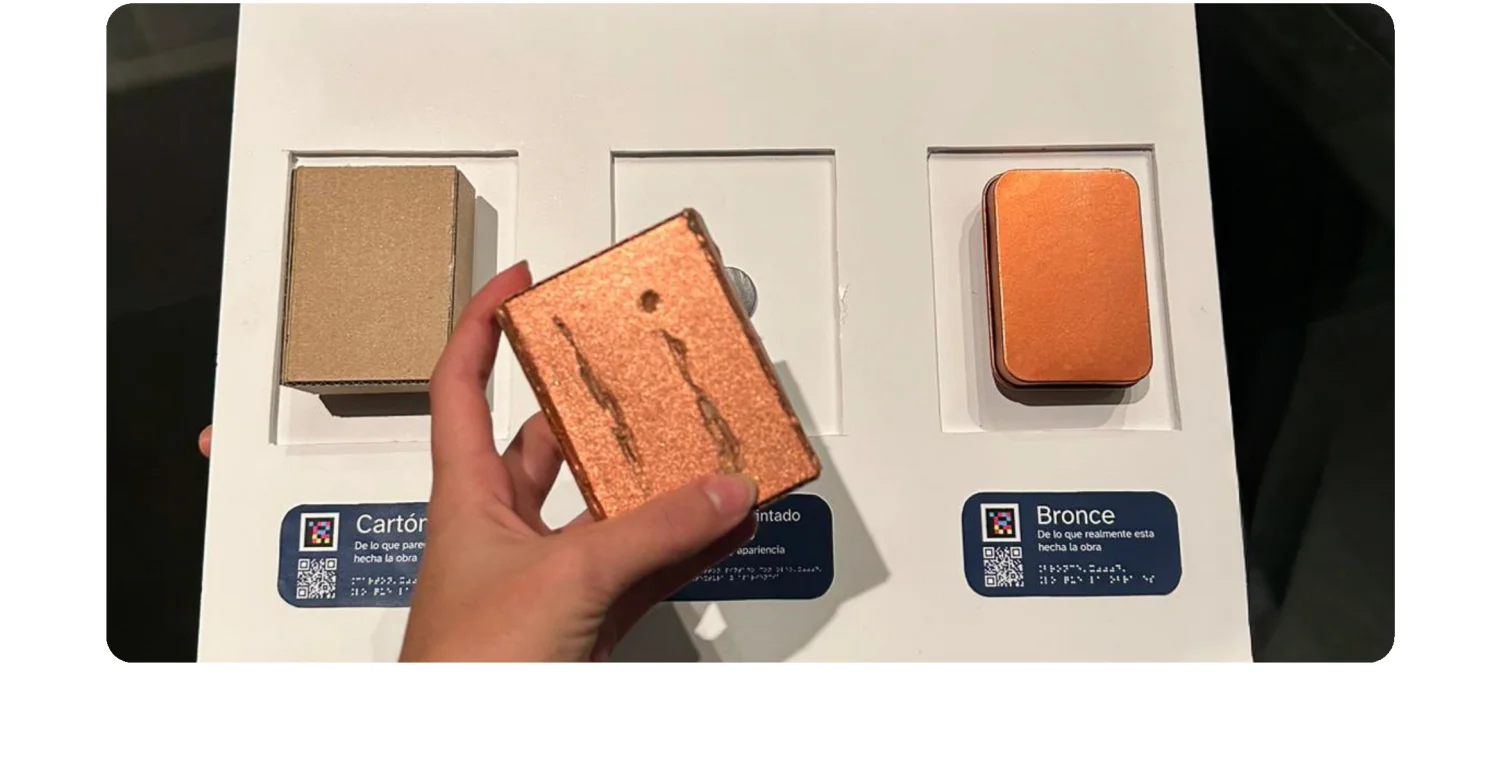
- Year
- 2026
- Context
- Service Design / Inclusive UX
- Project format
- Collaborative academic project for Museo Universidad de Navarra
- Role
- Researcher, Service Designer, Experience Designer
- Skills
- Inclusive design, User interviews, Accessibility, Journey mapping
Case study
Challenge. Response. Result.
Challenge
Museums often present physical, cognitive, and sensory barriers that limit meaningful participation for visitors with disabilities.
Design response
A multisensory museum experience combining accessible communication, guided touchpoints, a sensory table, and user-centered service improvements.
Result
The team developed an inclusive service proposal, journey maps, communication touchpoints, and a sensory-table prototype for a more accessible museum visit.
What it shows
Arte al Alcance shows how to study real barriers and turn them into an accessible experience.
A collaborative academic project with Museo Universidad de Navarra inside a teaching-innovation project focused on accessibility and inclusion.
Direct museum observation, interviews, empathy maps, customer journeys, and barrier analysis.
Ideation of a multisensory experience with accessible communication and guided touchpoints.
Development of visual materials, prototypes, and process documentation.
Proposal for a sensory table, orientation, signage, adapted map, QR audio, braille, sign-language content, and tactile elements.
Available evidence: journeys, empathy maps, interview material, process photography, prototypes, final dossier, and presentation.
Research and inclusive experience
Arte al Alcance shows how to study barriers and translate them into a museum experience.
It is a collaborative academic project inside a teaching-innovation project with Museo Universidad de Navarra. My contribution included user research, artwork observation, interviews, barrier analysis, ideation, visual materials, prototyping, presentation, and documentation.
The strength of the case is working with real users and turning findings into accessible touchpoints: orientation, clear communication, QR audio, braille, sign-language content, and tactile elements.
- Context
- Collaborative academic project with Museo Universidad de Navarra
- Duration
- September - November 2025
- Research
- Observation, five interviews, empathy maps, and journeys
- Evidence
- Dossier, journeys, prototypes, process photos, and presentation
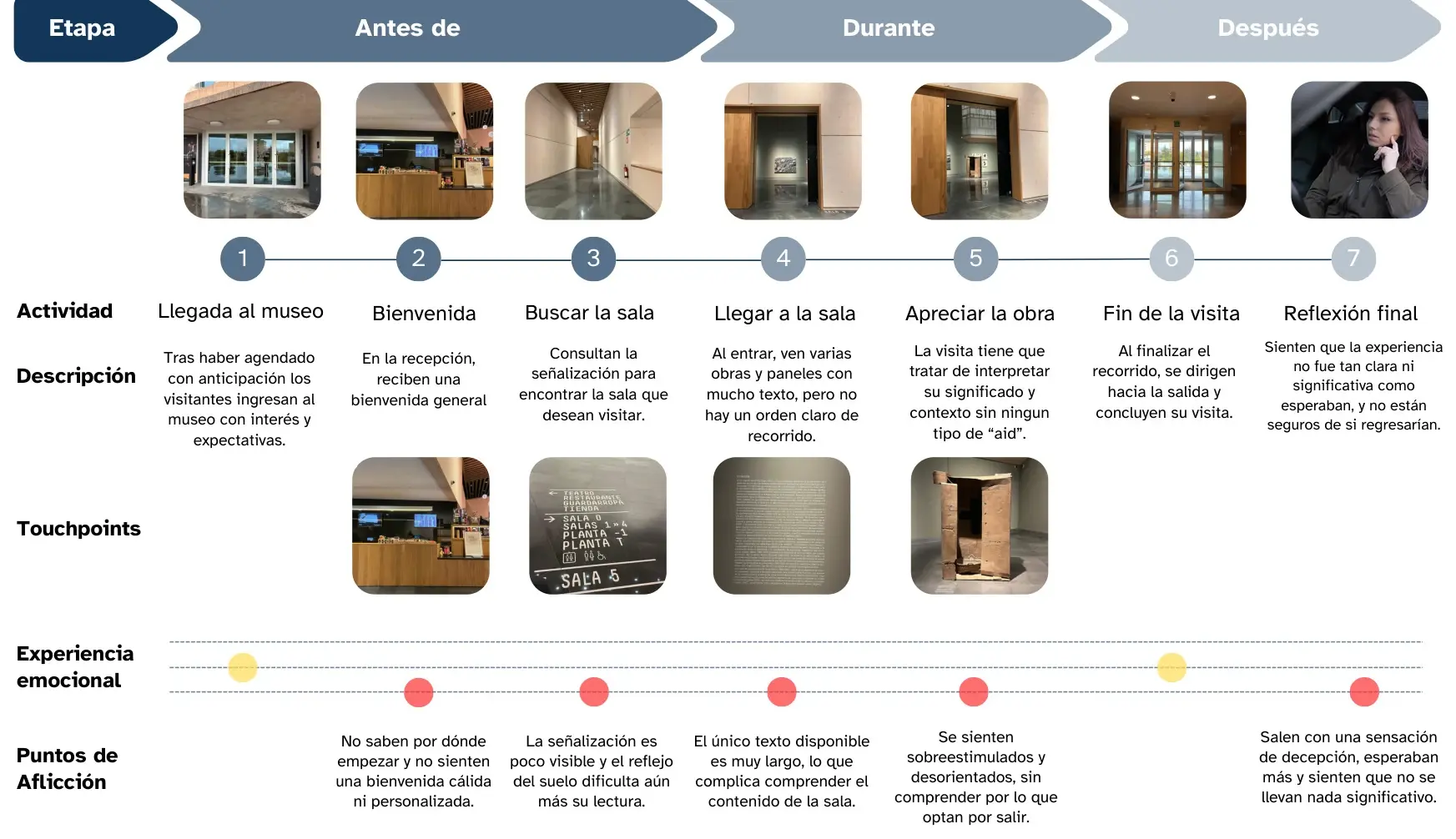
01 / Diagnose
Existing journey and access barriers
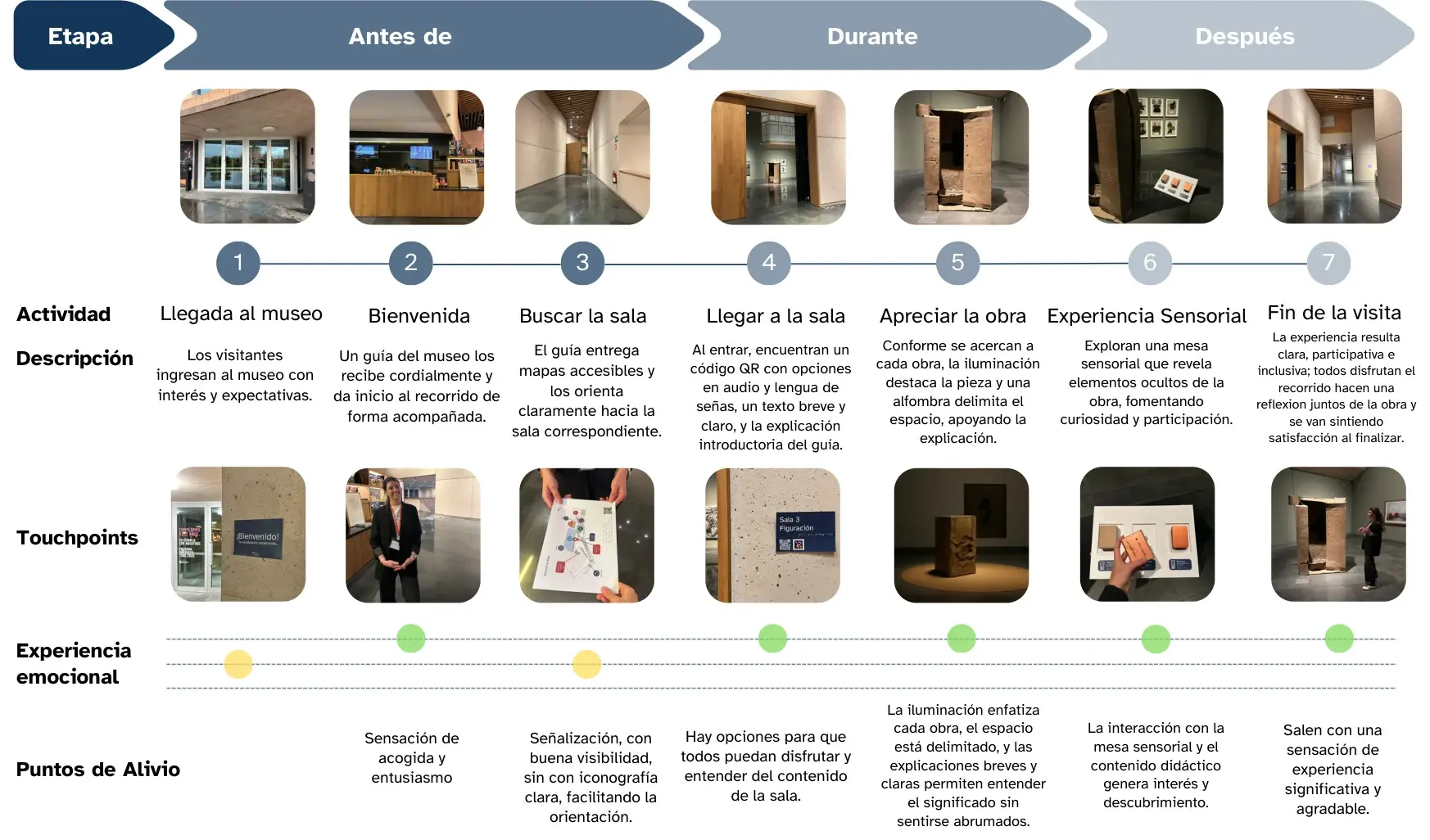
The process mapped the visit before, during, and after observing the artwork, identifying physical, sensory, and cognitive barriers within the museum journey.
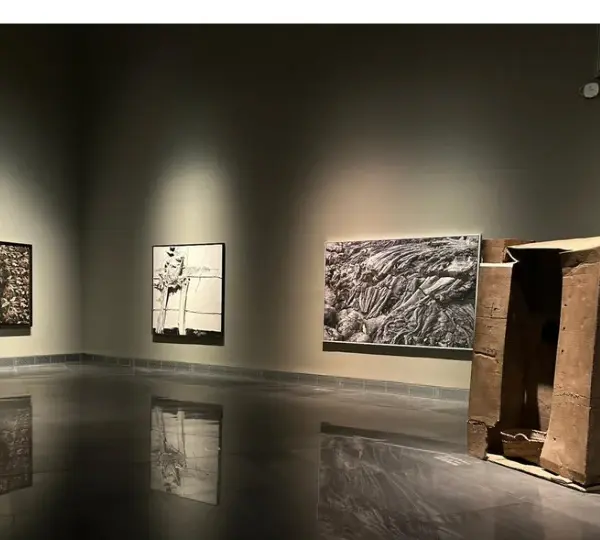
02 / Ideate
A guided and inclusive experience
The proposal combines a museum guide, adapted map, focused lighting, seating, signage, and accessible reading options so more visitors can orient themselves and understand the room.
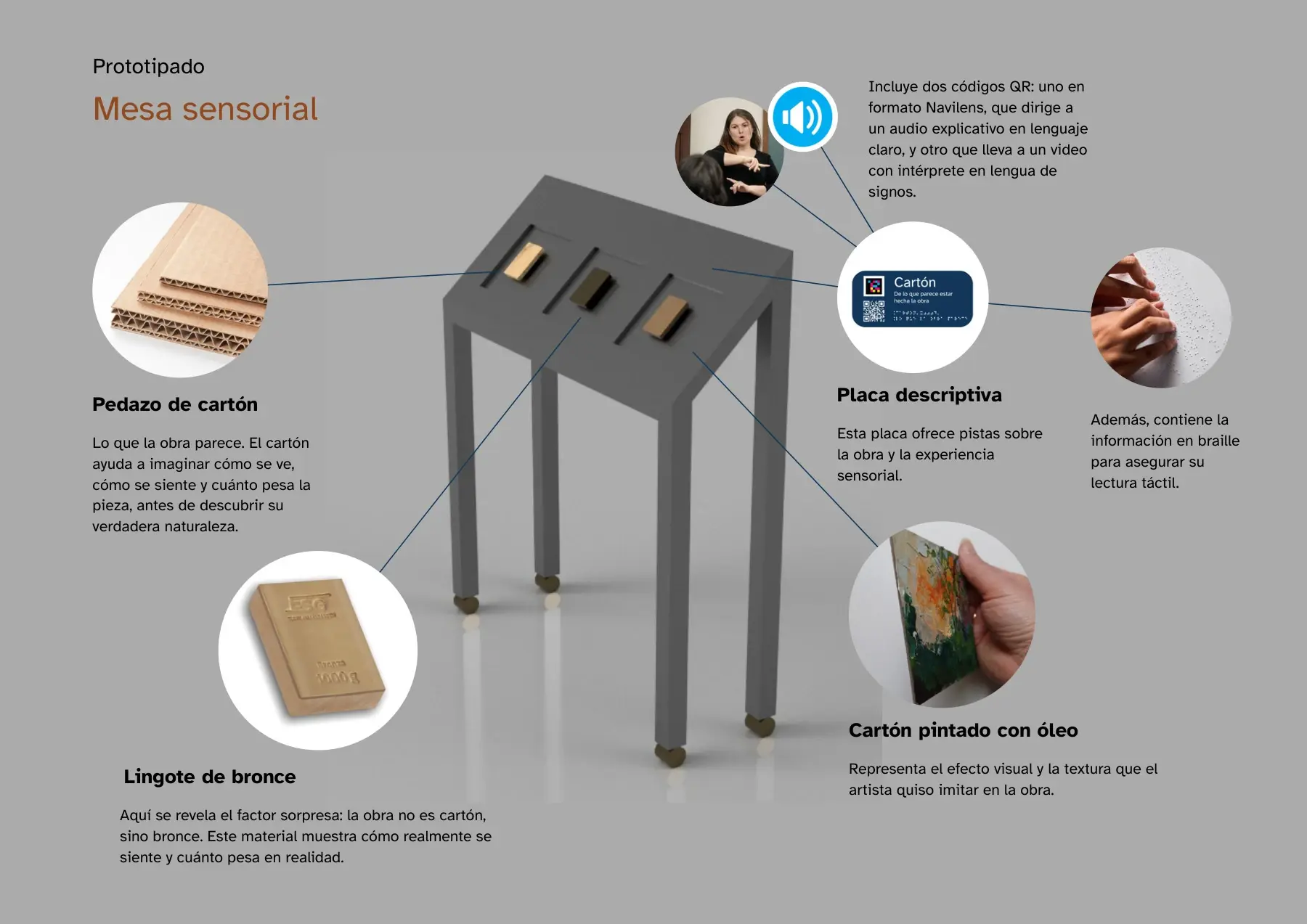
03 / Prototype
Sensory table and tactile elements
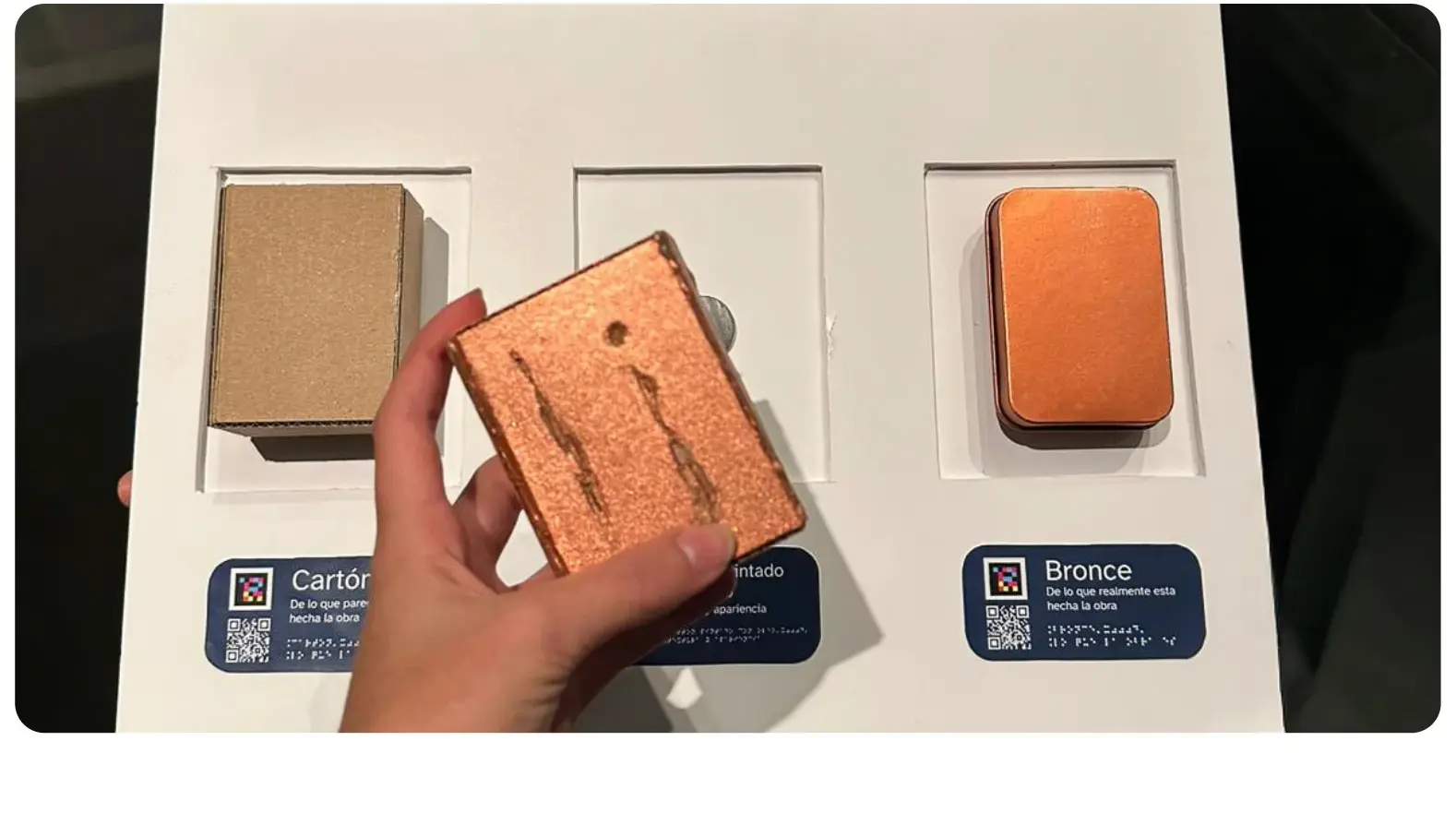
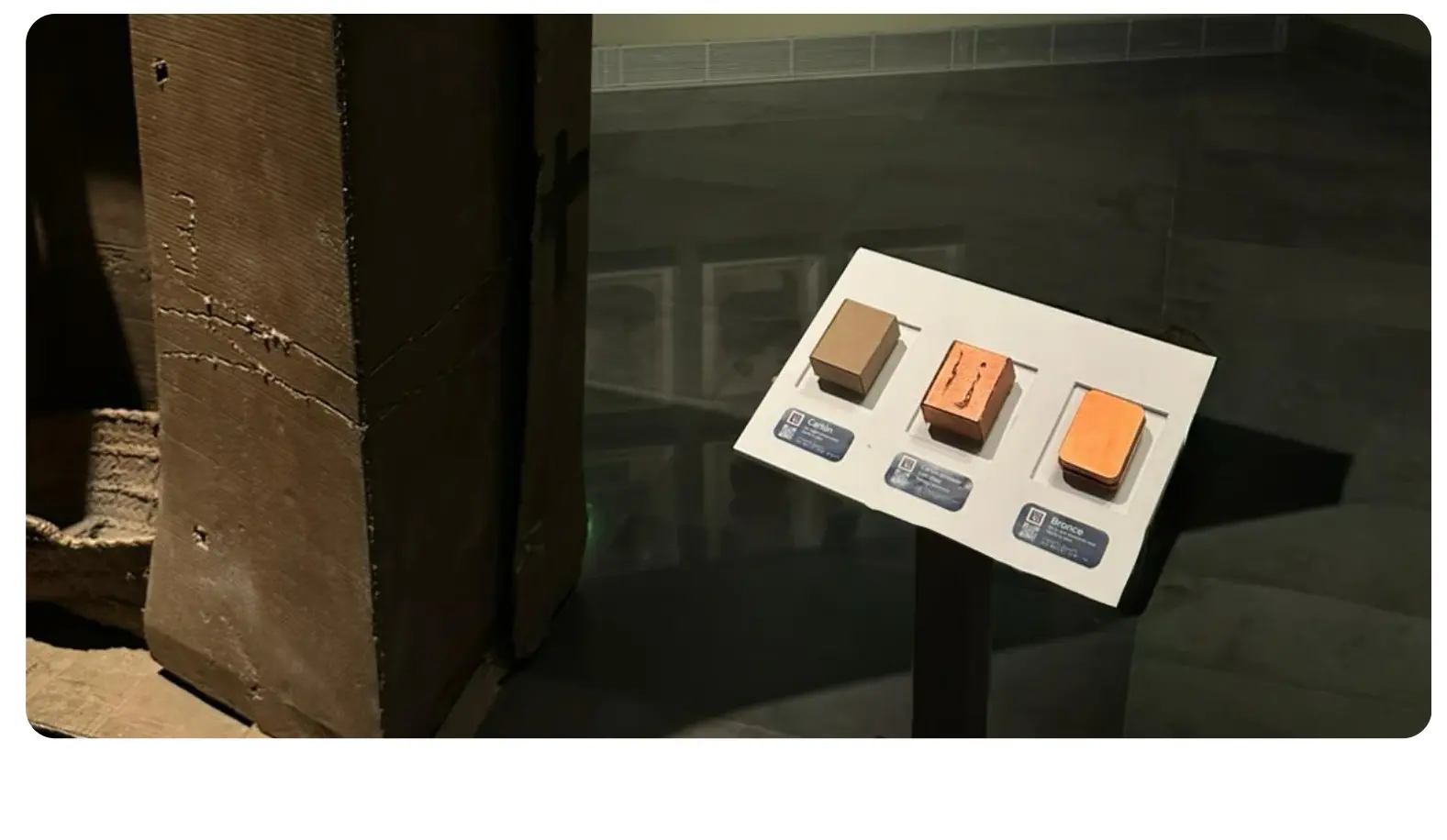
The system incorporates a sensory table for Composició amb Cistella, tactile materials, QR audio, sign-language content, and braille as complementary access layers.
04 / Revise
A revised journey with relief points
The proposed journey reorganizes touchpoints to reduce disorientation, expand comprehension options, and make the experience clearer, more participatory, and more inclusive.
Next project